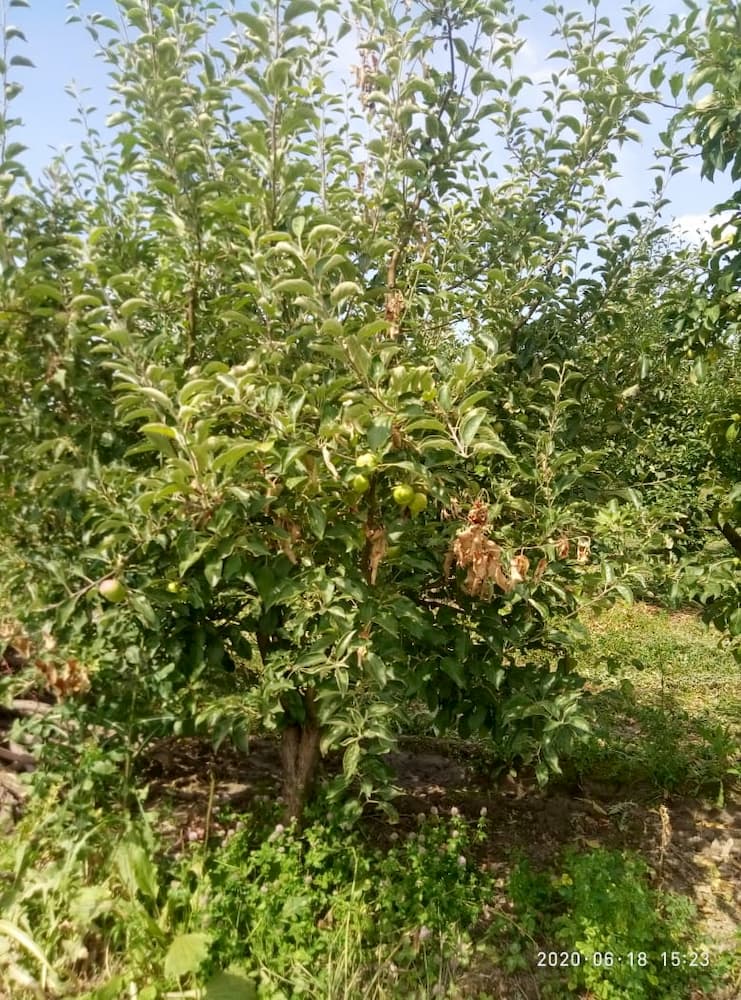
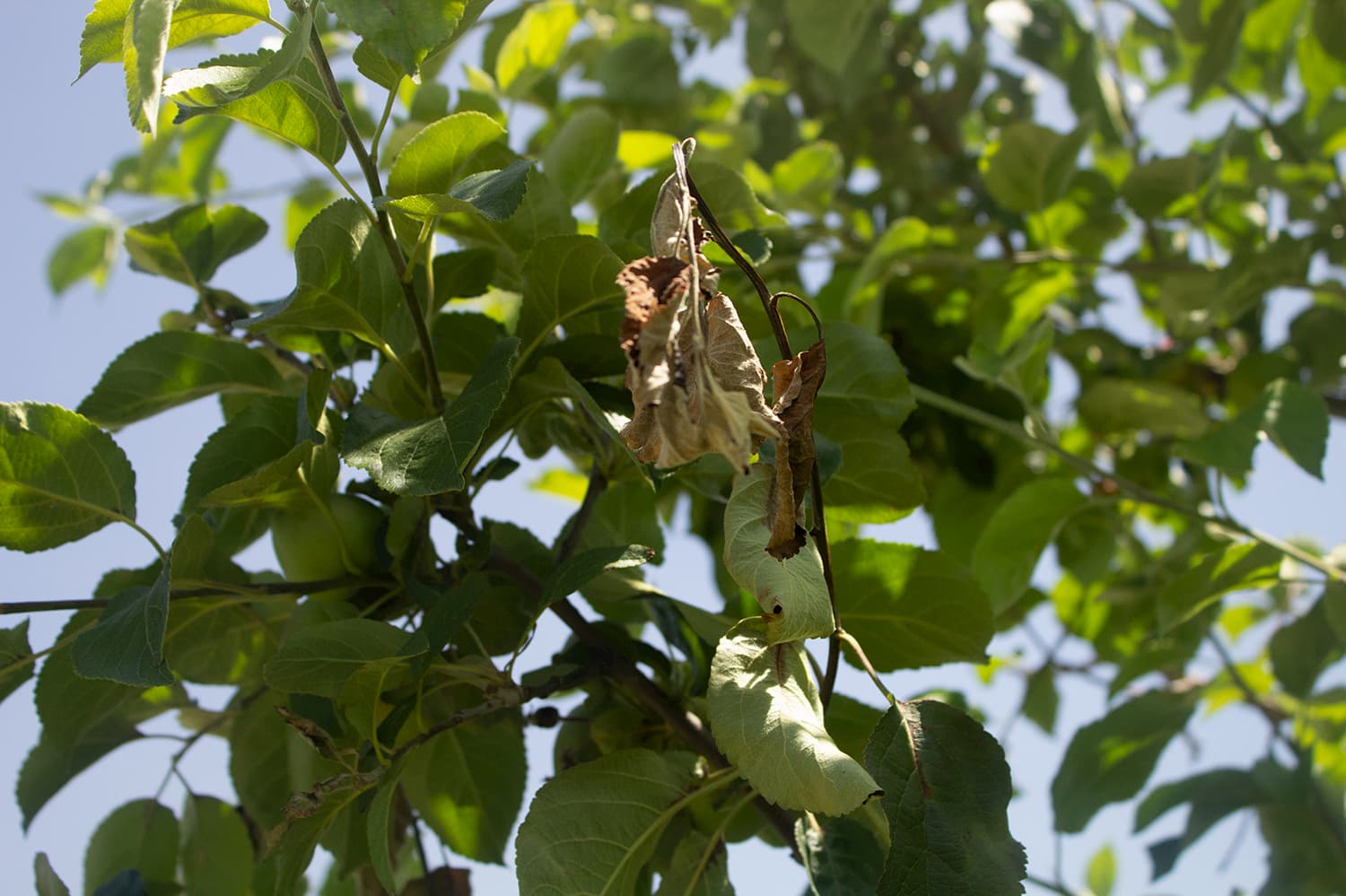
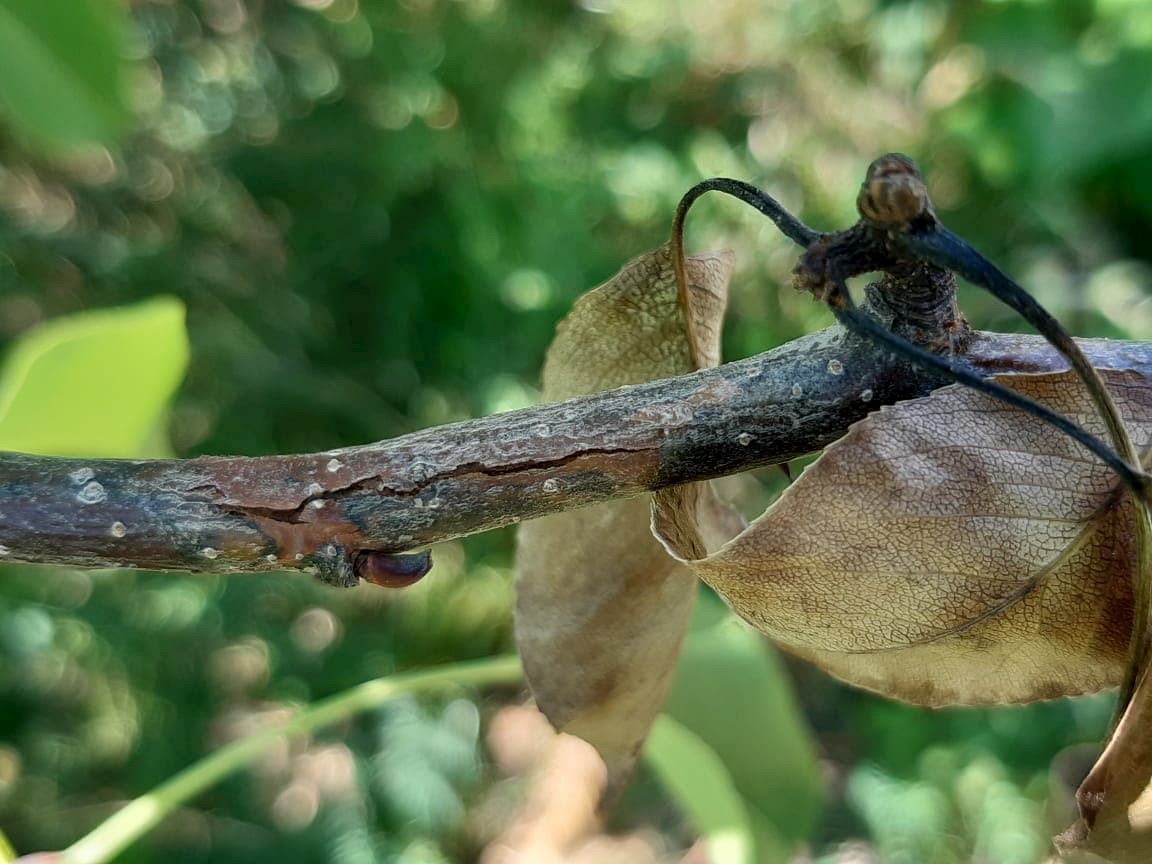
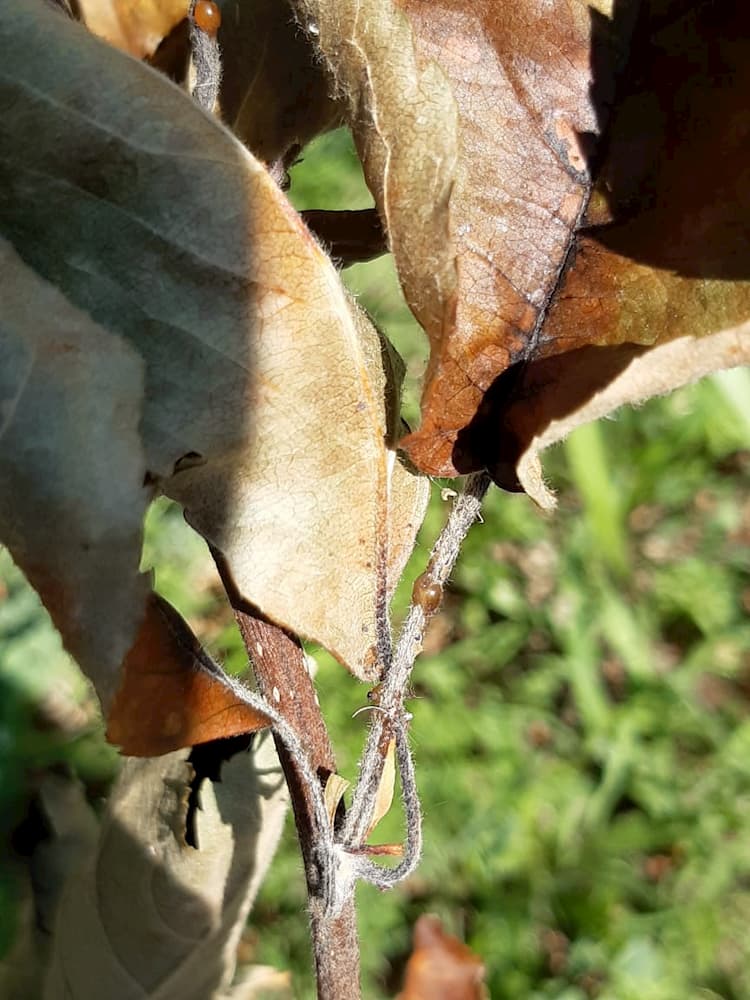
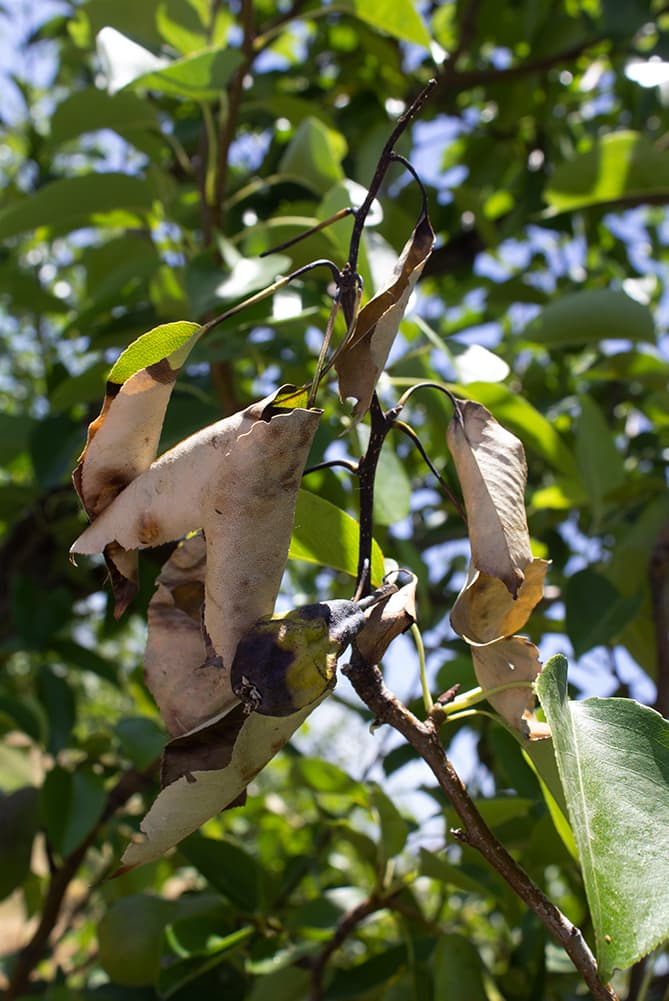
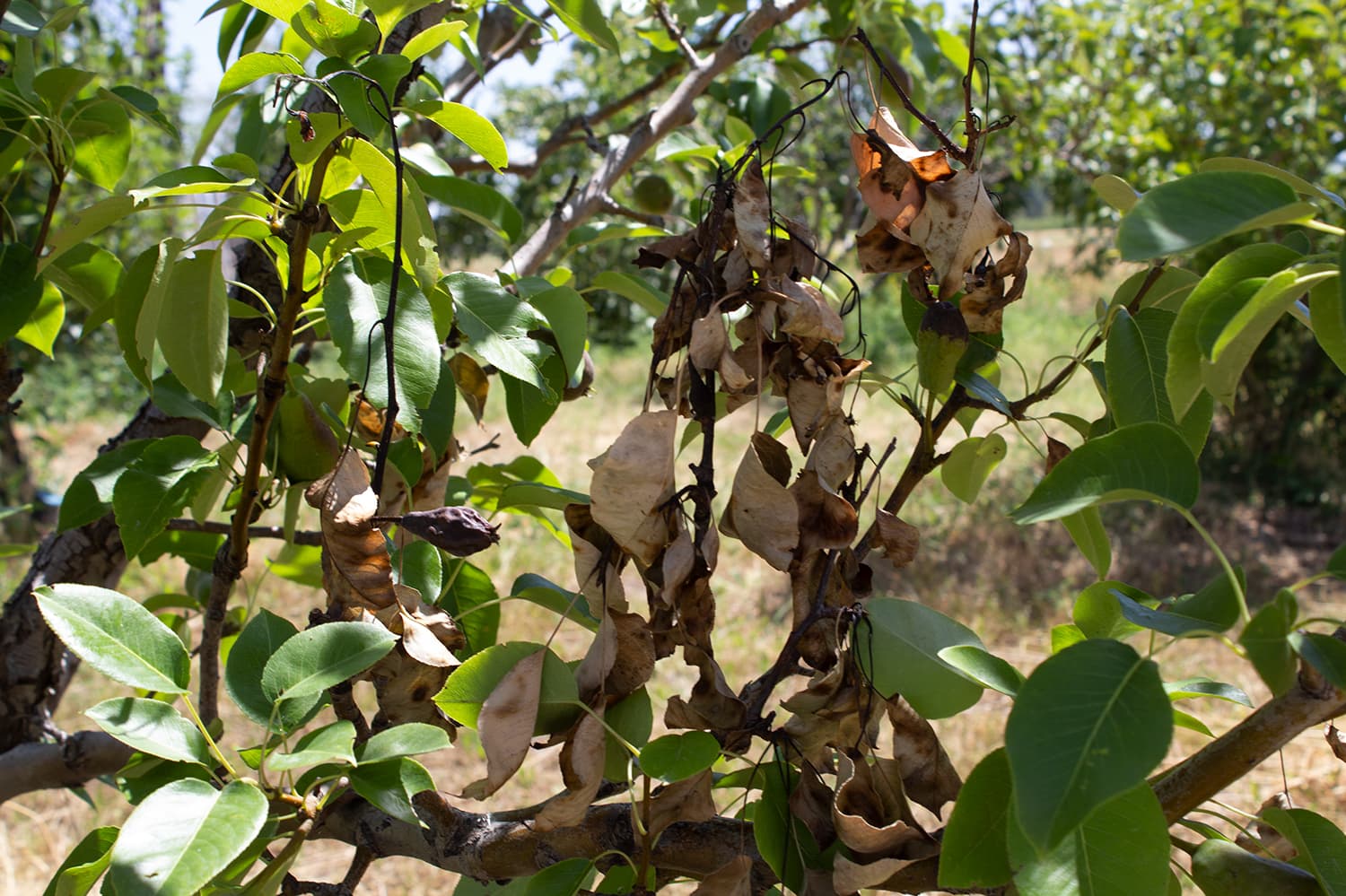
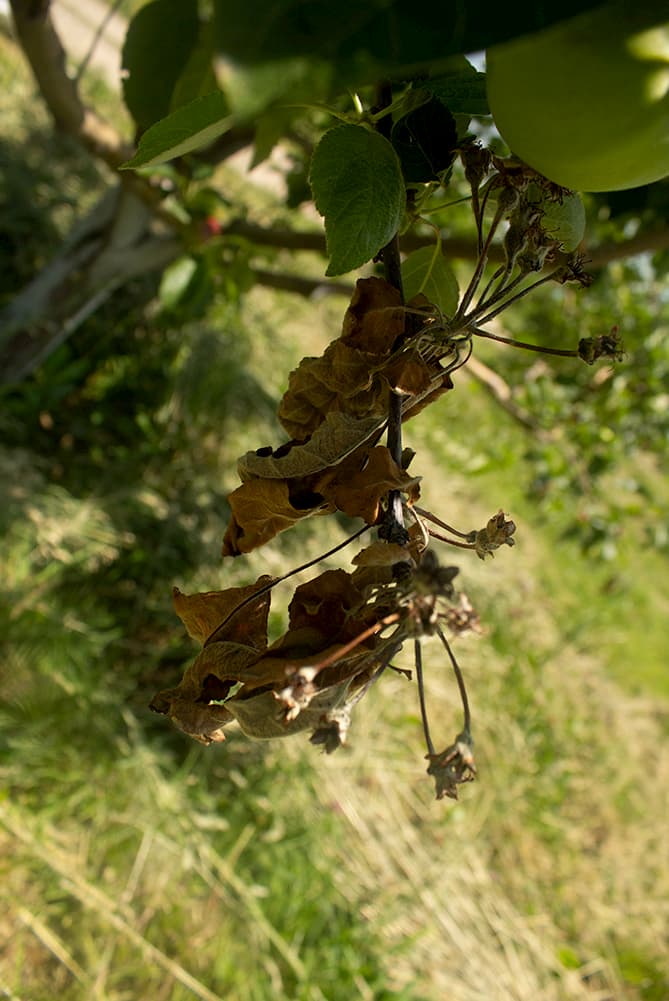
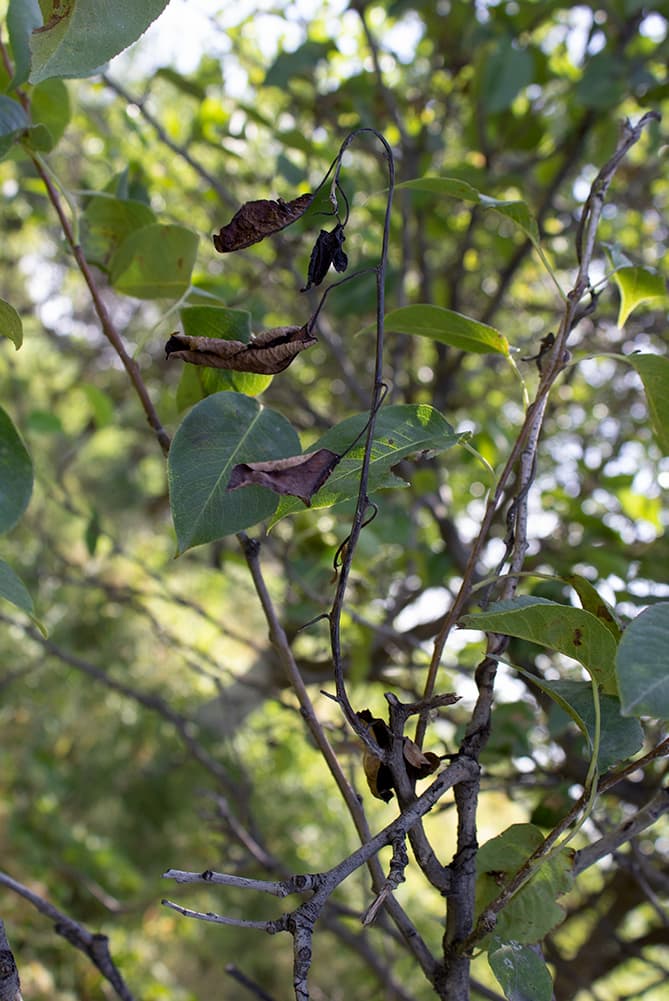
Fire blight
Bacterial fire blight (fruit trees) – Erwinia amylovora (Burrill) Winslow et al.
It is a dangerous quarantine disease, and scientific research against fire blight of fruit trees is being conducted worldwide; however, to date, complete eradication measures have not been developed. Fire blight of fruit trees was first identified in Kazakhstan in 2010. The disease affects all fruit crops, but apples and pears are particularly severely affected.
Currently, the Kazakh Research Institute of Protection and Quarantine of Plants has developed “Methodological Guidelines for the Detection and Identification of Fire Blight in Fruit Trees”, “Instructions for the Localization and Elimination of Fire Blight in Infected Fruit Crop Areas”, and “Recommendations for Preventive Measures and Localization of Fire Blight Foci in Fruit Crops”.
In December 2020, recommendations on integrated control measures against fire blight in fruit crops, taking into account global experience, will be prepared. These measures aim to suppress the disease to a level that does not have a noticeable impact on agricultural production.
In orchards affected by fire blight, if more than 30% of the area is damaged, the trees must be uprooted.
Integrated control measures against fire blight, based on global experience and our research, include:
- Early spring first spraying of apple trees before bud break (in March) with the copper-containing product Kocide, application rate 2 kg/ha.
- Second spraying after bud break (early April) with Kocide, application rate 2 kg/ha.
- Third spraying at the beginning of apple flowering (May) with biological products – Kasumin, Fitolavin, or Agri Gent Plus, application rate 2 l/ha, repeated after 7–14 days.
- Fourth spraying immediately after flowering with the growth regulator Progexadion calcium, 1.25 kg/ha, repeated after 2–3 weeks.
- Fifth spraying with the fungicide Aliett, application rate 3 kg/ha, repeated after 5 weeks.
- After harvest, when 50% of the leaves have fallen (late September – early October), spray with the copper-containing product Kocide, 2 kg/ha.
- In October, whitewash tree trunks with lime mixed with 4% copper sulfate.
- During winter and early spring, perform sanitary pruning of apple trees.
Additionally, micronutrients containing copper, zinc, boron, manganese, phosphites, immunomodulators, bioproducts, amino acids, and growth regulators can be used; these are described in detail in the forthcoming recommendations.
The main products against fire blight of fruit trees are: Kocide, Kasumin, Fitolavin, Agri Gent Plus, and Aliett.
The product Kocide (copper hydroxide, 350 g/kg) has an application rate of 2 kg/ha; hazard class for humans and animals is 2 (moderately toxic), hazard class for bees is 3 (slightly hazardous). Application timing: before bud break; green cone phase; pink bud phase; and in autumn after harvest. Using Kocide after flowering and after fruit set may cause a netting effect on apple fruits, which can lead to loss of commercial appearance.