Bioagents for Greenhouses
Beneficial Entomophagous Insects for Protected Cultivation
Beneficial Entomophagous Insects are specially bred parasites or predators that serve as natural enemies of harmful species. By using biological agents correctly, it is possible to fully control the population of crop pests in a managed environment—such as greenhouses or hydroponic farms—without the use of chemicals.
Application of Biological Agents is the most environmentally friendly method of pest control. Biological agents locate their prey on their own, feed on them, or lay their offspring in them. In this way, the natural cycle repeats multiple times until the pest population is completely eliminated.
Advantages of Biological Agents Compared to chemical protection:
- Requires minimal energy input;
- Helps reduce chemical impact on the environment;
- Does not lead to contamination of agricultural products or the environment;
- Does not disrupt ecological balance;
- Provides long-lasting effects;
- Harmless to humans, improving working conditions in greenhouses;
- At high populations, entomophagous insects and entomopathogens can independently reduce pest numbers to a level where they no longer cause significant damage to crops.
Beneficial Insects (Entomophagous Insects)
These are organisms that use other insects and mites as food or as hosts for their offspring. They play a key role in biological plant protection by maintaining the natural balance of agroecosystems. Proper use of biological agents allows complete control of pest populations in managed environments—such as greenhouses and hydroponic farms—without the use of chemicals. In protected cultivation (greenhouses, hoop houses), they are especially relevant, as they create a more stable and environmentally friendly plant protection system without chemical intervention.
The most effective entomophagous insects used in protected cultivation include:
- Trichogramma (Trichogramma pintoi);
- Bracon (Bracon hebetor);
- Aphidius (Aphidius colemani);
- Encarsia (Encarsia formosa);
- Mastrus (Mastrus ridens);
- Common Green Lacewing (Chrysoperla carnea);
- Macrolophus (Macrolophus nubilis);
- Podisus (Podisus maculiventris);
- Asian Ladybird (Harmonia axyridis);
- Seven-spotted Ladybird (Coccinella septempunctata);
- Amblyseius (Amblyseius swirskii);
- Phytoseiulus (Phytoseiulus persimilis).
The main types of bioagents
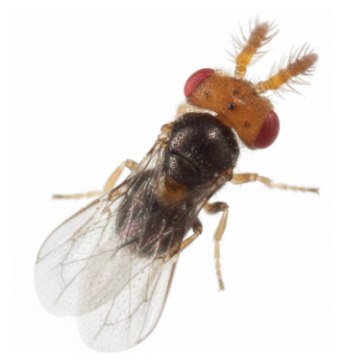
Trichogramma pintoi
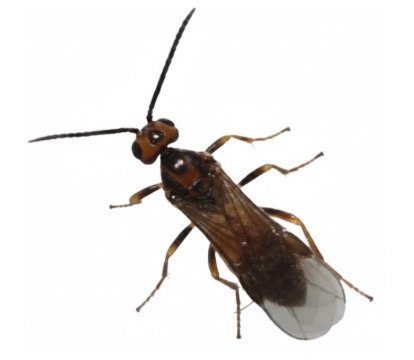
Bracon hebetor Say.
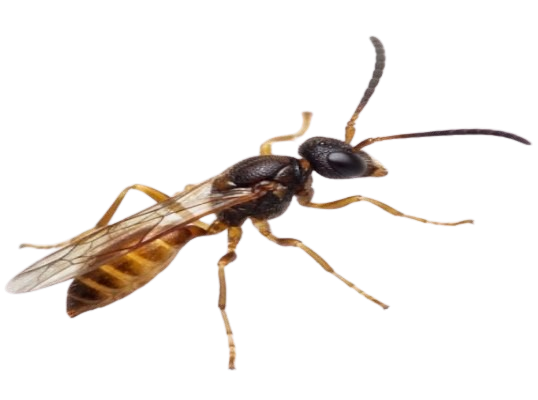
Aphidius colemani V.
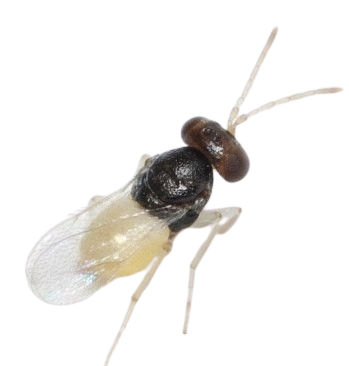
Encarsia formosa Gah.
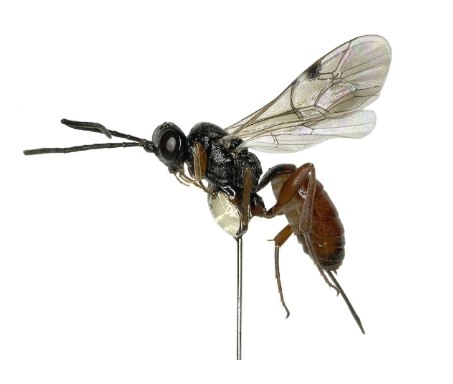
Mastrus ridens Horst.
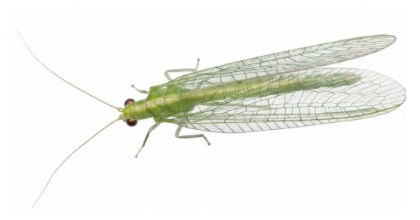
Chrysoperla carnea Steph.
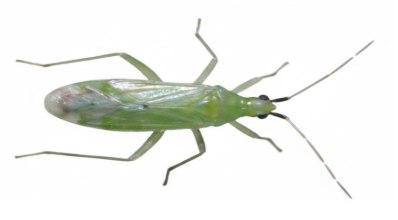
Macrolophus nubilus H.S.
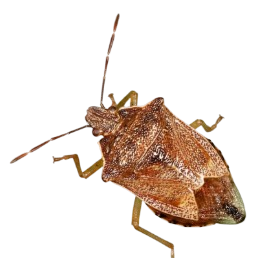
Podisus maculiventris Say.
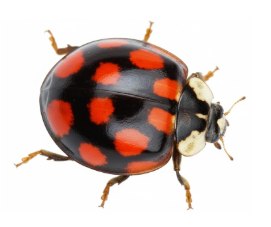
Harmonia axyridis Pall.
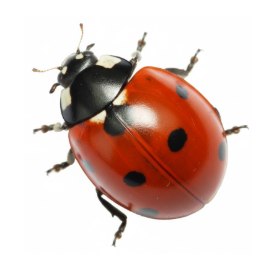
Coccinella septempunctata L.
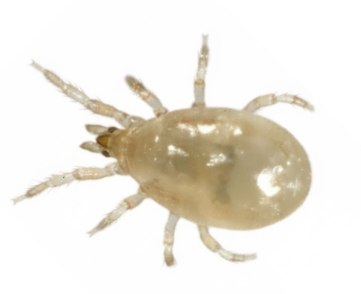
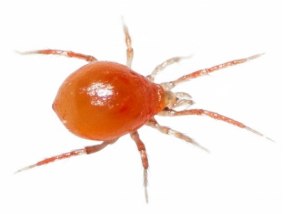
Amblyseius swirskii A.-H.